Why Is My AC Not Cooling My House?
Quick Answer: Common Causes
- Dirty or clogged air filter — check and replace yourself
- Thermostat set incorrectly or malfunctioning — check settings yourself
- Frozen evaporator coil — requires a technician to diagnose the root cause
- Dirty condenser coils — requires a technician
- Low refrigerant (leak) — requires a licensed technician
- Undersized system for the home — requires an assessment
- Ductwork leaks losing conditioned air — requires a technician
An air conditioner that runs but fails to cool the house is one of the most common summer HVAC problems. The system sounds like it is working — the outdoor unit is running, air is coming from the vents — but the temperature inside just will not come down. There are seven common causes, ranging from a simple filter you can check yourself to a refrigerant leak that requires a licensed technician. Here is what each one looks like and what needs to happen to fix it.
Do Not Run a Frozen AC System
If you suspect your evaporator coil is frozen — reduced airflow, ice visible on the lines, or the system running without cooling — turn it off and let it thaw completely before calling for service. Running the system while the coil is frozen can damage the compressor, turning a moderate repair into a much more expensive one.
1. Dirty or Clogged Air Filter
A severely restricted air filter is one of the most common reasons an AC system runs without cooling effectively. When the filter is clogged, airflow across the evaporator coil drops sharply. The coil cannot absorb heat from the air passing over it, the system loses cooling capacity, and in some cases the coil freezes over entirely — which makes things worse.
Check your filter. If it is visibly grey and packed with debris, replace it. If you replace the filter and the system still is not cooling, the problem is something else — call a technician to diagnose it.
2. Thermostat Set Incorrectly or Malfunctioning
Before assuming there is a mechanical problem, check the thermostat. Confirm it is set to COOL (not HEAT or FAN only), that the set temperature is lower than the current room temperature, and that the fan is set to AUTO rather than ON. A thermostat set to ON runs the fan continuously, circulating uncooled air between cycles and making the house feel warmer than it should.
Also check the thermostat batteries if it uses them. A low battery can cause erratic behavior or prevent the system from receiving the signal to cool. If the settings look correct and the system still is not responding, the thermostat itself may be faulty and need to be replaced — a straightforward repair for a technician.
3. Frozen Evaporator Coil
The evaporator coil sits inside your air handler and absorbs heat from the air in your home. When airflow across it drops too low — due to a clogged filter, a closed or blocked return vent, or low refrigerant — the coil can drop below freezing and ice over. A frozen coil cannot absorb heat, so the system runs but produces little to no cooling.
If you suspect a frozen coil, turn the system off and let it thaw — this can take several hours. Do not run the AC while the coil is frozen, as it can damage the compressor. Once it thaws, replace the filter and check that all vents and registers are open. If the coil freezes again, the underlying cause — low refrigerant or an airflow problem — needs to be diagnosed and fixed by a technician.
4. Dirty Condenser Coils
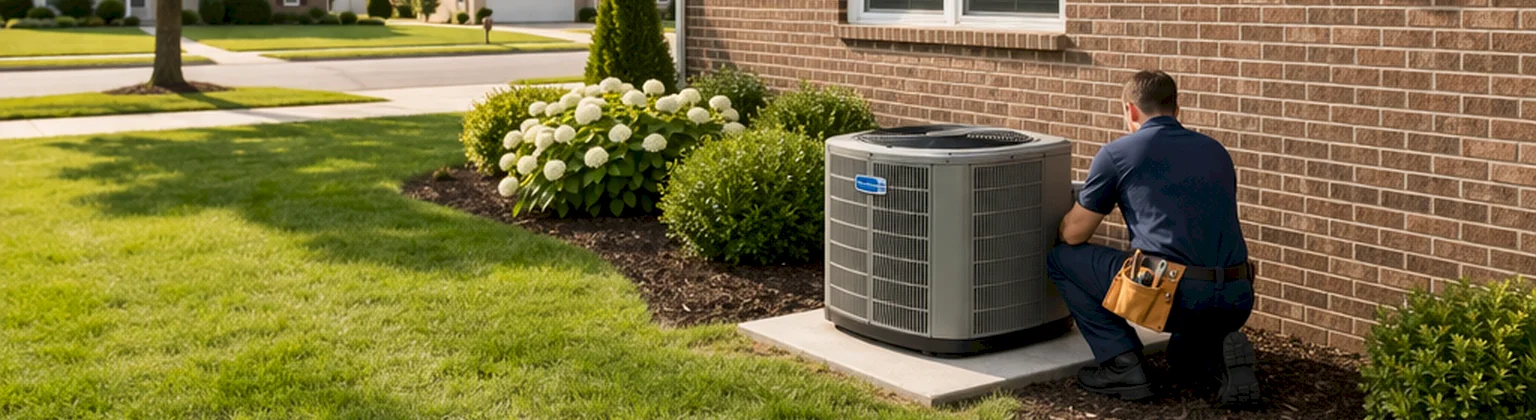
The outdoor condenser unit releases the heat your AC pulls from inside your home. The condenser coils need to be clean and have adequate airflow around them to do this efficiently. Over time, the coils accumulate dirt, cottonwood, grass clippings, and other debris. When they are coated, the system cannot reject heat properly, and cooling capacity drops.
You can keep the area around the outdoor unit clear of vegetation and debris — there should be at least two feet of clearance on all sides. Cleaning the coils themselves involves rinsing with a hose or using coil cleaner, and it is best done as part of an annual tune-up by a technician who can also check the fins and refrigerant charge at the same time.
5. Low Refrigerant Due to a Leak
Refrigerant is the substance that carries heat from inside your home to the outdoor unit. A properly functioning AC system does not consume refrigerant — if the level is low, there is a leak somewhere in the system. Low refrigerant reduces the system's ability to absorb heat, so the AC runs but the house stays warm.
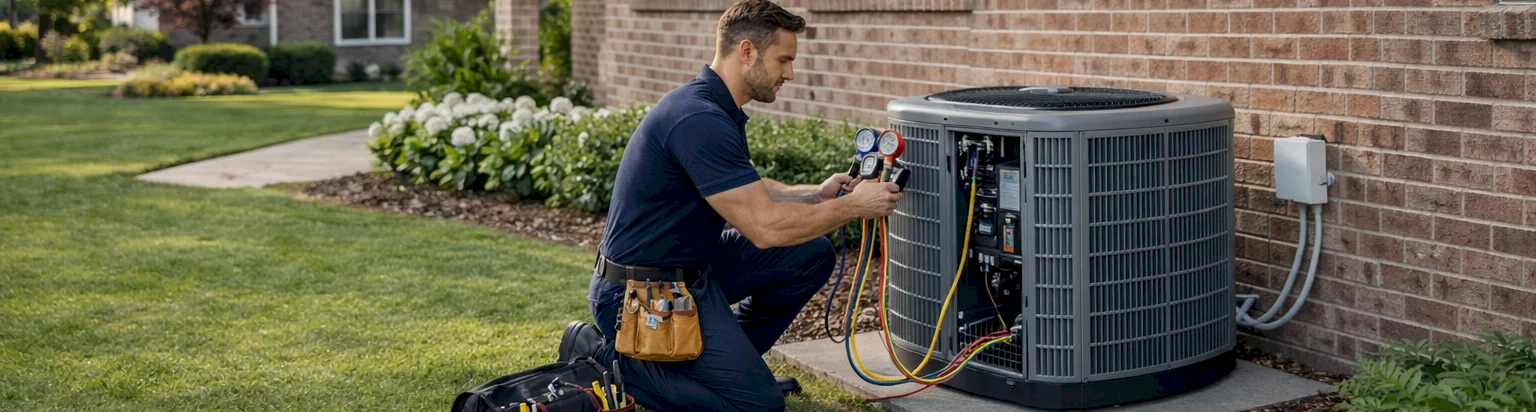
Signs of a refrigerant leak include ice on the refrigerant lines or evaporator coil, a hissing or bubbling sound near the unit, and the system running for long periods without reaching the set temperature. Refrigerant handling requires EPA certification — this is not a homeowner repair. A technician will locate the leak, repair it, and recharge the system to the correct level.
6. System Is Undersized for the Home
An air conditioner that is too small for the space it is cooling will run almost continuously on hot days and still never bring the temperature down to the set point. This is especially noticeable during extended hot stretches.
If your system has always struggled to keep up on hot days — rather than this being a new problem — undersizing may be the issue. A Manual J load calculation can determine the correct system size for your home. If the existing system is undersized, replacement with a properly sized unit is the only real fix.
7. Ductwork Leaks
Even if your AC is producing cold air, leaky ducts can prevent that air from reaching the living spaces. If your ductwork runs through unconditioned areas like an attic, crawl space, or garage, air escaping through gaps and disconnected joints never makes it to the rooms you are trying to cool. The system works hard, the electric bill climbs, and the house stays warm.
A technician can perform a duct leakage test to quantify the problem and recommend sealing or repair. Duct sealing is one of the most cost-effective improvements you can make to an underperforming system.
Still Have Questions?
This article is general educational information, not a quote or service promise. Contact details and scheduling for this business have not been configured yet.