Should I Repair or Replace My Furnace?
Quick Answer: Key Factors to Weigh
- Cracked heat exchanger at any age: replace the furnace
When your furnace breaks down — especially in the middle of winter — the pressure to make a quick decision can lead to the wrong one. The right answer depends on the age of the system, the nature and cost of the repair, the condition of the heat exchanger, and how efficiently the furnace has been running. Here is a clear framework for thinking through the decision without guessing.
Never Operate a Furnace With a Cracked Heat Exchanger
A cracked heat exchanger can allow carbon monoxide to enter your home's air supply. If a technician diagnoses a cracked heat exchanger, do not run the furnace until it has been repaired or the system has been replaced. Install carbon monoxide detectors on every level of your home if you do not already have them — CO is odorless and colorless.
1. Start With the Age of the Furnace
Age is the most reliable first filter.
Components throughout the system are aging together, not just the one that failed. Repairing one part does not reset the clock on the ignitor, heat exchanger, blower motor, or gas valve — all of which are subject to the same wear.
The other factors below — repair cost, heat exchanger condition, and repair history — should guide the decision.
2. The Heat Exchanger Is a Special Case
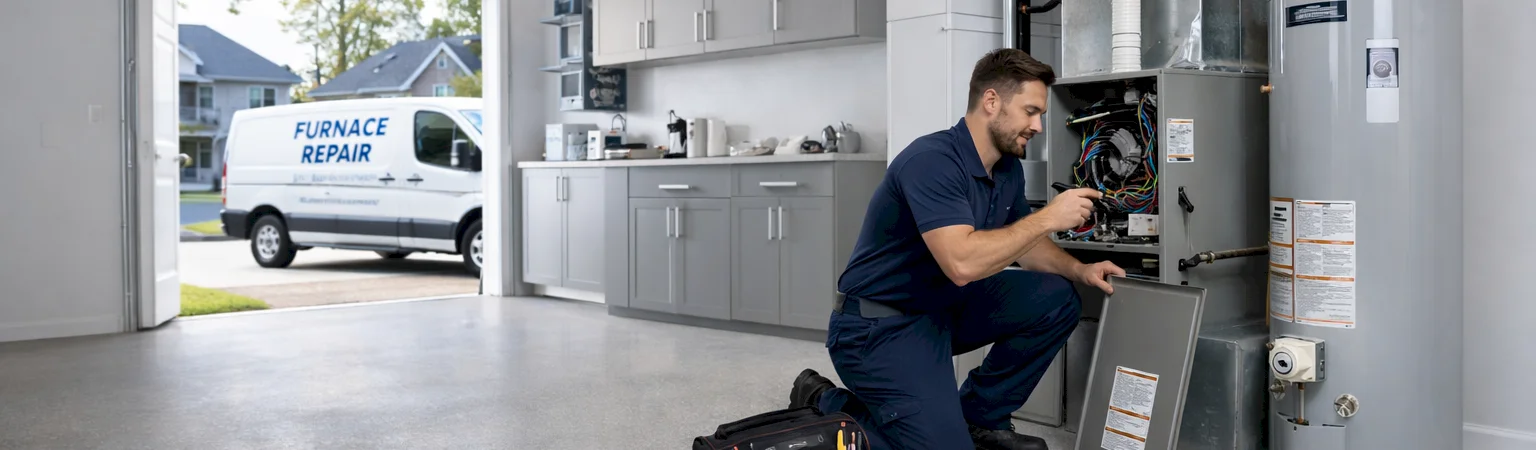
The heat exchanger is the component that separates combustion gases — including carbon monoxide — from the air circulating through your home. A cracked or failed heat exchanger is a safety issue, not just a mechanical one. If a technician finds a cracked heat exchanger, the furnace should not be operated until it is repaired or replaced.
At that age, the cost of replacing the heat exchanger approaches or exceeds the cost of a new furnace, and the rest of the system is aging alongside it.
3. Look at Your Recent Repair History
A single repair on an otherwise reliable furnace is not a warning sign. But two or three service calls in the past two heating seasons is a pattern worth taking seriously. Aging furnaces tend to fail in clusters — once one component reaches the end of its life, others are not far behind.
Seeing both numbers at the same time gives you the information to make a real decision rather than reacting to each failure as it comes.
4. Factor In Efficiency and Heating Costs
When you get a replacement quote, ask the technician to estimate the annual energy savings of the new system compared to your current one — that number belongs in the comparison alongside the repair cost.
5. When Repair Is Clearly the Right Call
These components have defined lifespans and replacing them on an otherwise healthy system is normal maintenance, not a warning sign.
Repair also makes sense when you are not in a position to replace the system right now and the furnace can be kept running safely through the season. A technician can give you an honest read on whether the system is likely to hold up or whether you are likely to face another call before spring.
Still Have Questions?
This article is general educational information, not a quote or service promise. Contact details and scheduling for this business have not been configured yet.