What Should I Do If My HVAC Stops Working in Extreme Weather?
Quick Answer: Immediate Steps
- Call your HVAC contractor immediately — emergency service queues fill fast in extreme weather
- Identify vulnerable household members (elderly, infants, medical conditions) who may need to relocate
- In a heat emergency: close blinds, use fans, move to the lowest floor, stay hydrated
- In a cold emergency: use safe supplemental heat only, seal off unused rooms, conserve warmth
- Know your local warming center or cooling center locations as a backup option
A heating or cooling failure during extreme weather is one of the more urgent home problems — not just an inconvenience, but a potential safety issue for young children, elderly family members, and anyone with a medical condition affected by temperature. The steps below cover what to do immediately, how to stay safe while waiting for service, and how to improve your chances of getting a technician quickly during the busiest service periods of the year.
Carbon Monoxide Warning
Never use a gas oven, charcoal grill, camp stove, propane heater, or generator indoors to heat your home. These produce carbon monoxide, which is colorless and odorless and can cause unconsciousness and death within minutes in an enclosed space. If your CO detector sounds, leave the home immediately and call 911.
1. Do the Quick Checks Before You Call
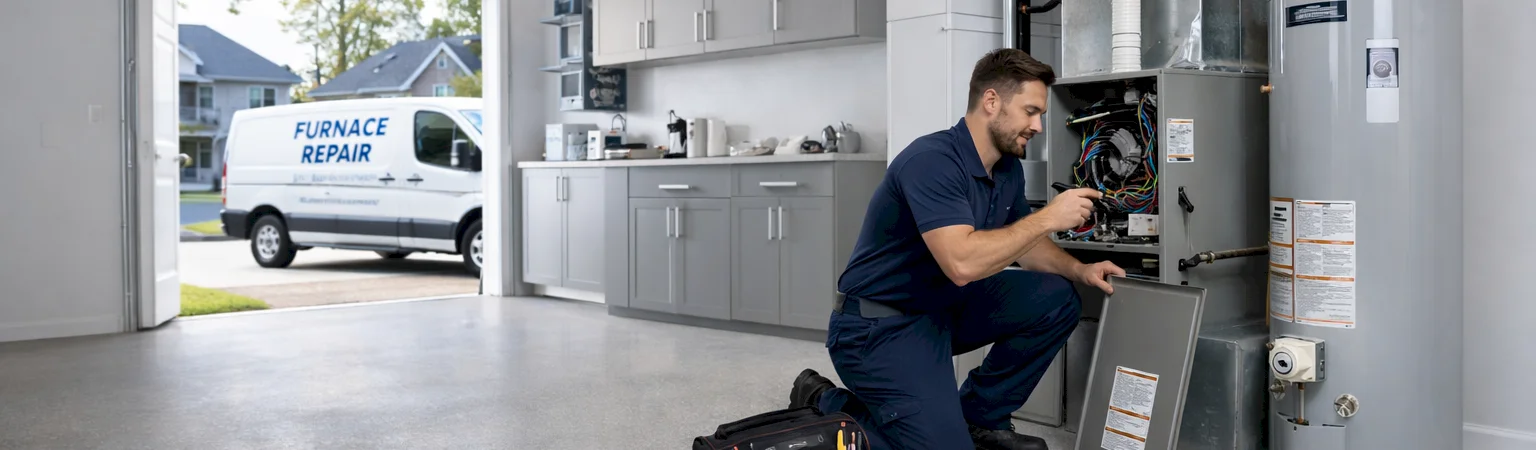
Before calling for emergency service, spend five minutes on the basic checks — they resolve a meaningful percentage of apparent failures. Check the thermostat: confirm it is set to the correct mode (HEAT or COOL) and that the set point is above (for heating) or below (for cooling) the current room temperature. Check the circuit breaker for the HVAC system and reset it if it has tripped. Check the air filter — a severely clogged filter can cause the system to shut down on high-limit. Check that the power switch on or near the furnace or air handler is in the ON position.
If the breaker trips again, do not reset it a second time — a breaker that trips repeatedly indicates an electrical fault that needs professional attention. If the basic checks do not resolve the issue, call your HVAC contractor.
2. Call Early — Emergency Queues Fill Quickly
During extreme heat or cold, HVAC contractors receive a surge of emergency calls. The earlier you call, the earlier your position in the queue. Do not wait to see if the system recovers on its own if the weather is dangerous — call as soon as you have confirmed the system is not running.
When you call, clearly describe the symptoms: what the system is doing (or not doing), any error codes on the thermostat or furnace display, and any unusual sounds or smells. This helps the dispatcher assign the right technician and arrive with the most likely replacement parts. Mention if there are elderly, infant, or medically vulnerable household members — most contractors will prioritize these situations.
3. Staying Safe During a Cooling Failure (Heat Emergency)
If the AC fails during a heat wave, the priority is keeping the indoor temperature from rising to dangerous levels. Move to the lowest floor of the home, where temperatures are naturally cooler. Use fans to create airflow, but understand that fans cool people, not rooms — they do not reduce the air temperature.
Heat-related illness can develop quickly in vulnerable individuals.
4. Staying Safe During a Heating Failure (Cold Emergency)
If the furnace fails during a cold snap, the home will lose heat gradually — the rate depends on insulation, outdoor temperature, and home size. Seal off unused rooms to concentrate heat in the spaces where people are present. Use extra blankets and layers, and gather household members in a single room to share body heat.
Supplemental heat sources can be used safely if handled correctly. Electric space heaters are the safest option — use only heaters with tip-over protection and keep them away from flammable materials. Never use a gas oven, charcoal grill, camp stove, or generator indoors for heat — these produce carbon monoxide, which is odorless and can be fatal. If you have a fireplace, it can provide meaningful warmth but should not be left unattended.
5. How to Get Service Faster
Being an existing customer of an HVAC contractor — especially one with a maintenance club membership — typically means priority scheduling during emergencies. Most contractors give existing maintenance customers preference over new callers during surge periods. If you do not have an existing contractor relationship, call multiple contractors simultaneously and take the first available appointment.
Be flexible on timing. Have your equipment information ready (brand, model number, age of system) to help the technician prepare.
6. Preventing the Next Emergency
Most HVAC failures during extreme weather are not random — they are the result of deferred maintenance or an aging system that was already stressed. A system that has not been serviced in two or more years is significantly more likely to fail when it is working hardest. Annual tune-ups catch the issues that become failures: a capacitor that is reading low, a contactor that is pitting, a refrigerant charge that is slightly low, a heat exchanger that is developing a crack.
Replacing a system on your schedule, before it fails, gives you time to compare quotes, choose the right equipment, and schedule installation at a non-emergency rate. A system that fails on the hottest day of the year gives you none of those options.
Still Have Questions?
This article is general educational information, not a quote or service promise. Contact details and scheduling for this business have not been configured yet.